
Unstable Kubernetes and CI/CD
If releases are stressful, rollbacks are common, and pipelines are unreliable, you do not have a delivery system. You have a risk engine.
- Failed deploys and inconsistent behavior across environments
- Rollbacks, hotfixes, and manual workarounds becoming normal
- Downtime during releases or after routine changes
- Incidents that cannot be reproduced or explained clearly
Instability is usually systemic
It is rarely one bug. It is the shape of the system and the way changes flow through it.
No guardrails
No reliable promotion path, no gates, no safe rollback strategy.
Config drift
Environments diverge, secrets are patched, and behavior becomes non-deterministic.
Cluster reality mismatch
Ingress, DNS, networking, and autoscaling are not aligned with runtime behavior.
Pipeline trust collapse
Builds are inconsistent, artifacts drift, and deploys become roulette.
Make delivery boring again
Predictability is the goal. Boring is expensive. Boring is good.
Release safety
Safe deploy strategy, rollback posture, change control that does not panic.
Drift control
Stop manual patches. Rebuild repeatable config and secret flow.
Operational clarity
Runbooks, ownership boundaries, and incident response signals that matter.
What unstable release systems usually indicate
Symptom: Rollback succeeds only sometimes
Usually means artifact integrity and promotion flow are inconsistent.
Symptom: Hotfixes bypass the pipeline
Usually means release pressure already exceeds guardrails.
Symptom: Incidents follow routine deploys
Usually means config drift and environment parity are unresolved.
Immediate release-risk containment
Short sequence to stop repeated failures.
Immediate checklist
- Freeze ad-hoc deploys and enforce one promotion path.
- Validate rollback path on current production artifacts.
- Diff environment config and secrets for highest-risk services.
Artifact snapshot
Release-control matrix used in triage.
Control                     Owner
Artifact immutability       Platform team
Rollback rehearsal          On-call + release owner
Config drift checks         Service owners
Promotion gate approval     Delivery lead
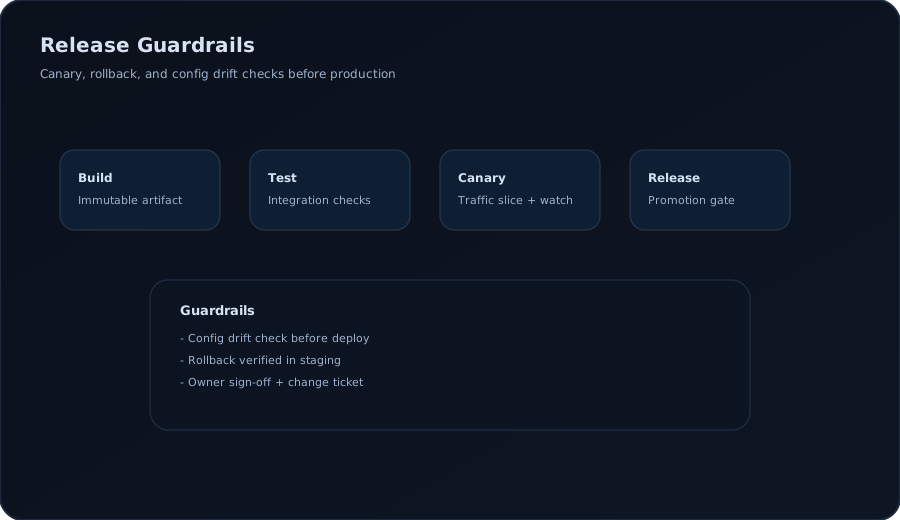
Release guardrails snapshot
How stable teams prevent chaos before it reaches production.
Guardrail flow
Canary, rollback, and config drift checks.
Guardrails we implement
The set that makes release days boring.
- Immutable artifacts with verifiable versions.
- Canary + rollback tested in real conditions.
- Config drift checks before every promotion.
What changes when stability returns
Lower downtime
Incidents reduce. Blast radius shrinks. Recovery gets faster.
Faster delivery
Release cycles shorten because you stop paying the chaos tax.
Higher confidence
The team stops fearing deploy day and starts shipping again.
Next pages for Kubernetes and release stabilization
If delivery is stressful, you are carrying platform risk. Send details.
If you are already feeling risk, friction, or uncertainty, send details. We respond within 24 hours.