
InfraForge reviews fragile infrastructure and gives SaaS teams a recovery plan.
Use InfraForge when the platform feels unstable, Terraform changes feel unsafe, or release pressure is rising faster than the team can clean it up. The first step is not a long discovery cycle. It is a short review request and a senior read on what is actually risky.
You send the issue
Email, short message, and optional priority are enough to start.
We isolate the risk
The first response clarifies the likely failure pattern and the safest next move.
You get the recovery path
If the work fits, the engagement starts with containment, sequencing, and clear ownership.
The first deliverable is concrete
The review is meant to replace vague concern with named failure paths, priority, and sequence.
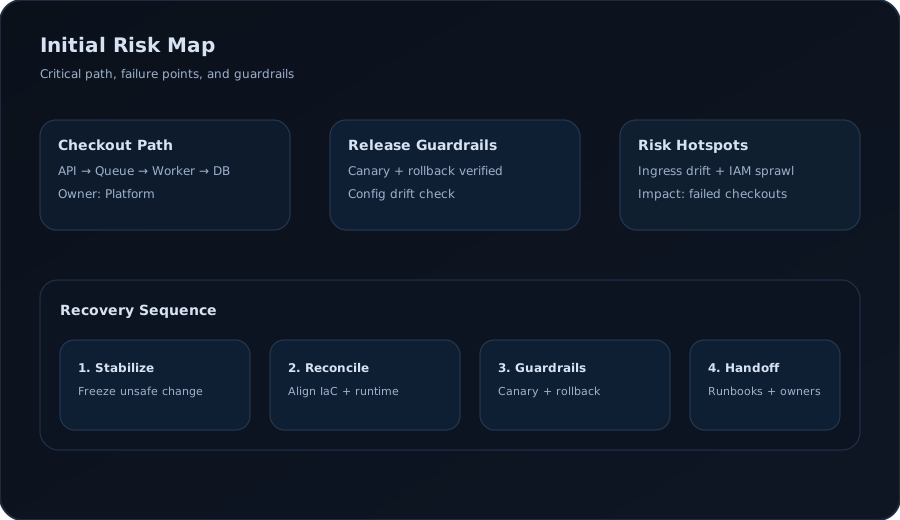
The first readout names the risky systems, the likely failure chain, the owner friction, and the next safe action.
What the review clarifies
- Where reliability is actually breaking, not just where it feels noisy.
- Which changes are safe to make first and which ones should stop immediately.
- How runtime, release flow, and Terraform or IaC debt are connected.
- What the internal team should own next versus what needs specialist recovery help.
"Muhammad Hassaan was a joy to work with and exceeded my expectations across the board. I will be hiring him again!"
Upwork client feedback
Most teams only need one next step
Request the review first. Use the rest of the site only if you need more context, proof, or a narrower issue page.
Request the review before you map the problem yourself.
The review is the cleanest entry point when the team knows there is risk but the real failure chain is still unclear.
- Send the issue in one short message.
- Get a senior read on the actual risk and the likely failure pattern.
- Leave with a written recovery path before more changes pile on.
Only branch out if it helps you frame the request.
The review remains the main path. The other pages are there only if you already know the issue class or you want more proof first.
- Use Recovery Paths only if the failure class is already obvious.
- Use Case Studies if you want proof that the same kind of recovery work has been done before.
- Use Insights if you want the recovery notes and decision logic first.