
Unstable Kubernetes and CI/CD
If releases are stressful, rollbacks are common, and pipelines behave differently every week, the team does not have a delivery system. It has a reliability risk that needs containment first.
- Routine deploys are causing incidents or rollback stress.
- Pipelines behave differently across environments.
- Manual workarounds and hotfixes are becoming normal.
- The team no longer trusts release day to be predictable.
This is the broader release-stability path
Use the specialist GitOps page only when sync loops and reconciliation are clearly the main blocker.
What this page covers
- Fragile rollout and rollback posture.
- Environment drift and weak config discipline.
- Pipeline trust collapse and inconsistent artifacts.
- Operational ownership that breaks down during incidents.
Use ArgoCD and GitOps recovery when
- Sync failure loops are now the main release blocker.
- Rendered output and live state no longer reconcile cleanly.
- GitOps drift is the specific reason teams stopped trusting deploys.
Make release day boring again
Stabilization starts by restoring one trusted promotion path, one tested rollback path, and one shared view of configuration reality.
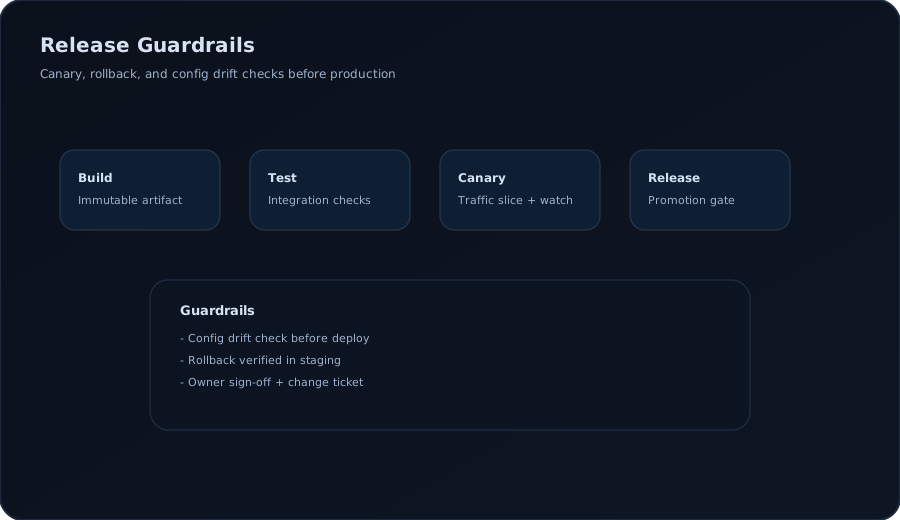
Stable teams make promotion, rollback, and drift checks part of the release path instead of relying on last-minute judgment calls.
First 24 hours
- Freeze ad-hoc deploys and re-establish one promotion path.
- Verify rollback safety on the current production artifact set.
- Diff the highest-risk environment config and secret paths.
- Assign explicit owners for release approval and change control.
Release-control matrix
Artifact immutability     Platform team
Rollback rehearsal        On-call + release owner
Config drift checks       Service owners
Promotion gate approval   Delivery lead
Next pages for Kubernetes and release stabilization
If release day creates avoidable risk, request a focused review.
Start with the review before another release compounds the problem.
The first goal is to restore predictable deploy behavior and stop normalizing rollback stress as standard operating procedure.