
Infrastructure recovery in real-world conditions
These cases are anonymized. The job of this page is simple: show how InfraForge stabilizes systems when a team is already under pressure and needs a clear recovery path.
Start with the cases that mirror your failure pattern
These are buyer-oriented summaries, not engineering diaries. They exist to help teams decide quickly whether the same recovery logic applies.
A good case study should reduce doubt, not add noise
The useful questions are the same across every engagement: what failed, how risk was reduced, and what the team could safely keep using after the intervention.
- Context and failure signals the team was living with.
- Intervention strategy and recovery sequence.
- Outcomes, guardrails, and retained artifacts.
- How risk was reduced without broad rework.
- How delivery or runtime stability improved.
- What the internal team could own after handoff.
Public signals from recent recovery work
Sanitized ranges and retained artifacts are more useful than generic claims.
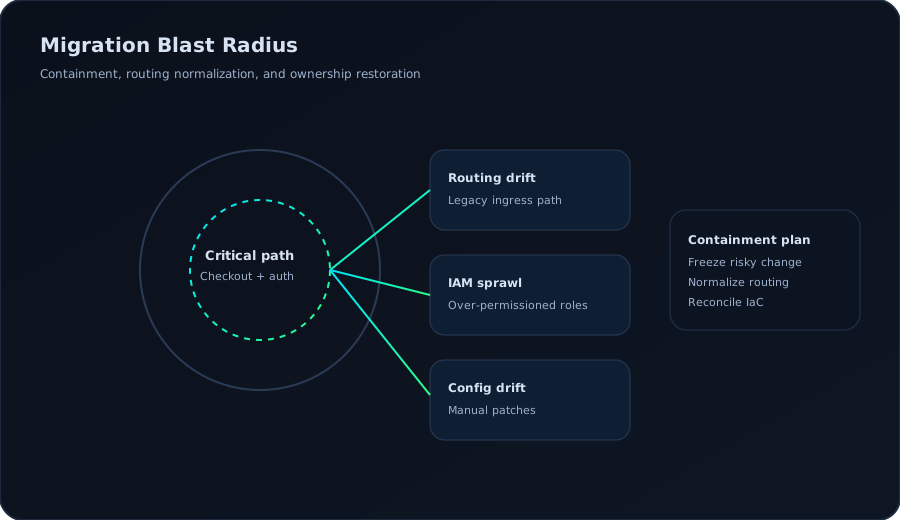
Risk: Migration routing drift
Impact: latency spikes + failed checkouts
Fix: normalize ingress + remove legacy route
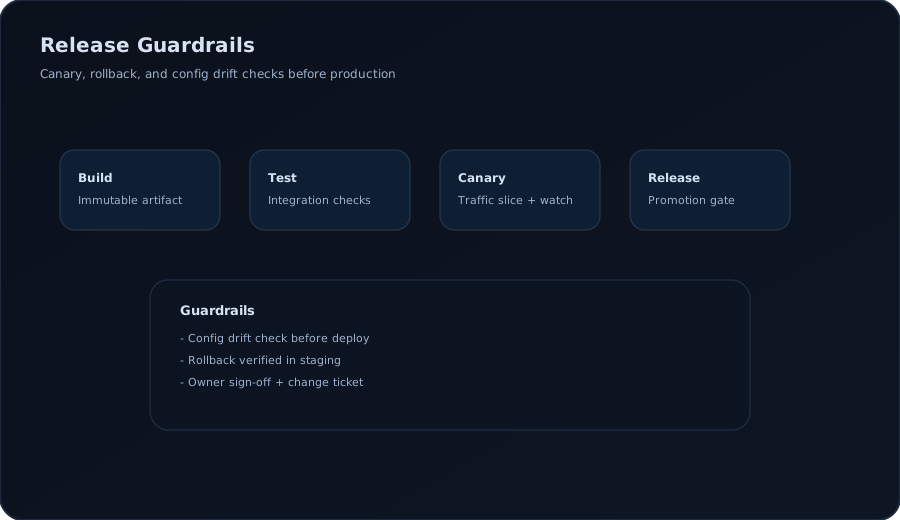
Guardrail: release gating + owner sign-off
The retained artifact stays focused on named risk, ownership, and the next safe action path.
"Muhammad Hassaan was a joy to work with and exceeded my expectations across the board. I will be hiring him again!"
Upwork client feedback