
Cloud migrations gone wrong
Moving to AWS, GCP, or Azure is supposed to reduce risk. If the move increased instability, cost pressure, or delivery friction, the next step is recovery and containment, not more rushed change.
- Reliability got worse after the move instead of better.
- Latency, DNS, ingress, or identity boundaries became harder to reason about.
- Terraform or runtime config was patched manually to keep the platform alive.
- Delivery slowed because the team stopped trusting the new shape of the system.
Migration fallout spreads through routing, ownership, and change control
The move is rarely the only problem. The real damage usually shows up in the layers around it.
What teams usually see first
- Critical paths slow down because routing assumptions changed.
- Permissions and service boundaries are no longer obvious.
- Stateful systems were moved without survivability guardrails.
- Temporary fixes became the new operating model.
Unclear systems attract more change, not less
- Hotfixes stack on top of hidden coupling.
- Runtime and IaC drift apart under pressure.
- Ownership gets fuzzier every time the team patches around a symptom.
- Each new release raises the chance of another avoidable incident.
Contain the blast radius before more change lands
Recovery starts by making the critical path understandable again, then bringing runtime and infrastructure back into alignment.
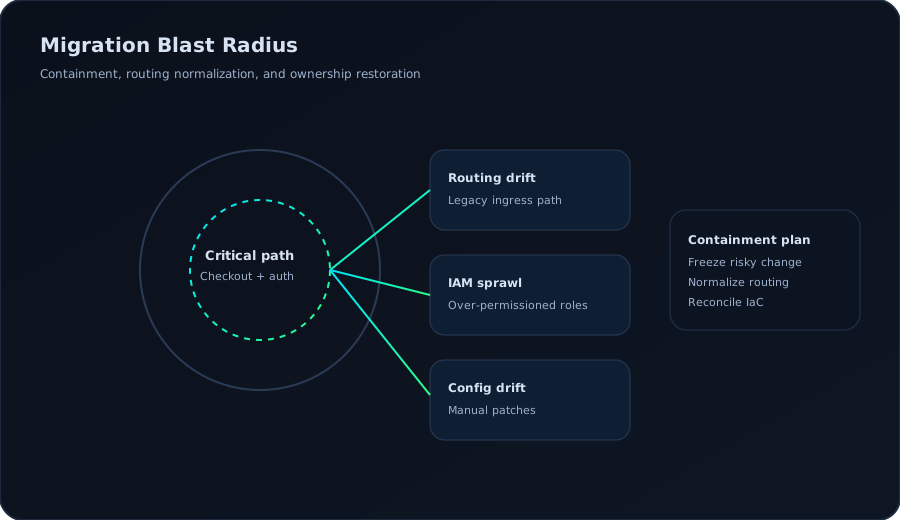
The first goal is to isolate where the move changed routing, permissions, or ownership enough to create ongoing instability.
First 24 hours
- Freeze risky changes and stop normalizing new symptoms as “migration noise.”
- Normalize DNS, ingress, and routing across the most critical paths first.
- Map manual patches that never reconciled back into infrastructure code.
- Re-establish the smallest safe deploy path before larger redesign work starts.
Immediate containment
- freeze risky infra changes
- verify critical path routing
- reconcile IaC with runtime reality
- assign owners for next safe actions
Next pages for migration recovery
If the move finished but stability got worse, request a focused review.
Start with the recovery review, not another migration plan.
The job now is to stabilize what exists, isolate the real failure path, and give the team a sequence it can trust.