
Kubernetes and CI/CD stabilization
Deployments were inconsistent, rollbacks were common, and release days were high stress. The team needed a delivery system they could trust again.
- Builds differed across environments.
- Manual hotfixes became normal.
- Release windows kept expanding.
- Incidents followed routine changes.
The job was to make deploy day boring again
This was a delivery-stability engagement. The platform team needed clearer release control, not more pipeline complexity.
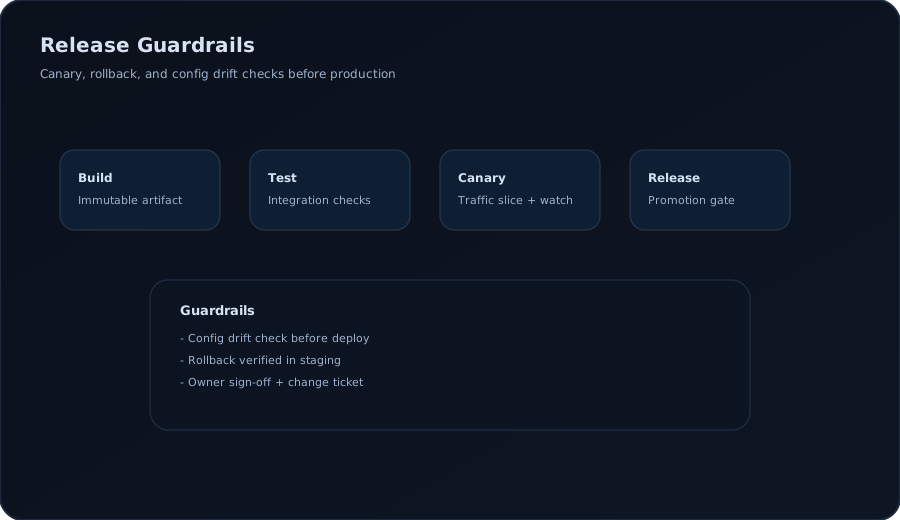
The retained release view showed where artifact integrity, rollout discipline, and rollback confidence were breaking down before incidents reached customers.
The platform did not need a new toolchain. It needed tighter release rules, more deterministic promotion, and fewer places where drift could creep in between build and production.
Standardize the release path before chasing speed
Release reliability improved when the team stopped treating every failure as a one-off hotfix.
First 72 hours
Capture the last known good release baseline, stop unsafe manual patches, and align rollback checks across the highest-risk services.
Next 2 weeks
Normalize pipeline behavior, tighten promotion rules, and remove the config drift that kept breaking parity across environments.
Context
Kubernetes-based SaaS platform, frequent releases, limited engineering bandwidth, and no reliable downtime window.
Success criteria
Rollback success improved, deploy windows tightened, and on-call stopped treating every routine release as an incident-risk event.
What the team kept after stabilization
The retained material was operational, not decorative. It stayed useful after the immediate engagement.
Release guardrails
- Immutable artifact tags verified
- Canary path and rollback tested
- Environment config drift checked
- Owner sign-off recorded before promotion
Why this mattered to the team
- Release readiness stopped depending on memory or heroics.
- Rollback decisions became faster because the checks were pre-defined.
- Ownership stayed clear enough for the internal team to keep operating safely.