
Migration recovery for a B2B SaaS platform
A cloud migration completed on schedule, but stability got worse. Incidents increased, delivery slowed, and the team lost confidence in the platform.
- Routing and latency inconsistencies after the move.
- Permissions drift and unclear ownership boundaries.
- State and config changes done manually to survive.
- Deployments became risky and unpredictable.
The work started with one question: what is actually breaking the revenue path?
This was not a migration retrospective. It was a recovery engagement built to stop repeat instability without forcing a second re-platform.
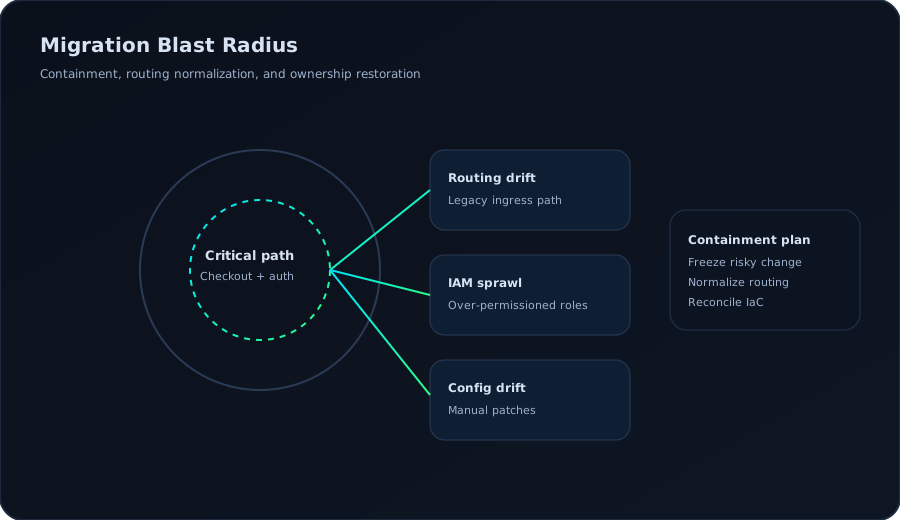
The first retained view tied routing, identity, and runtime dependencies to concrete failure paths so the team could stop guessing which post-migration issues were actually coupled.
The platform team did not need abstract "optimization." They needed a bounded recovery sequence that contained live risk first, then restored predictable delivery.
Contain, trace, then repair
The sequence mattered. The job was to stop more risky changes from landing while the actual failure chain was mapped.
First 72 hours
Freeze unsafe deploy changes, isolate the unstable traffic path, and reconcile the highest-risk permission and runtime overrides.
Next 2 weeks
Remove the legacy route coupling, normalize ingress behavior, and restore a release path that did not depend on tribal knowledge.
Context
Growth-stage SaaS platform, lean platform team, minimal downtime tolerance, and no appetite for another full redesign.
Success criteria
Critical-path latency stabilized, rollback confidence restored, and ownership became clear enough for the internal team to operate safely.
What the team kept after the recovery work
The retained assets were designed to survive after the immediate incident pressure dropped.
Symptom: latency spikes after cutover
Root cause: mixed ingress + legacy route ownership
Impact: checkout errors during peak demand
First fix: normalize ingress + remove legacy fallback
Guardrail: release gating + owner sign-off
Why this was useful internally
- Business impact was tied to named technical causes, not vague migration anxiety.
- The platform team had a safe sequence instead of parallel uncoordinated fixes.
- Ownership boundaries were explicit enough for follow-through after handoff.