
Terraform debt cleanup
Infrastructure changes were risky, state locks were common, and nobody trusted what plan would do. The team needed IaC that was safe, readable, and predictable.
- Frequent state locks and unexplained diffs.
- Manual console changes to keep systems alive.
- Modules too coupled to refactor safely.
- Drift and environment confusion.
The work started by making Terraform understandable again
This was not a big-bang rewrite. The objective was to create safe change control while delivery kept moving.
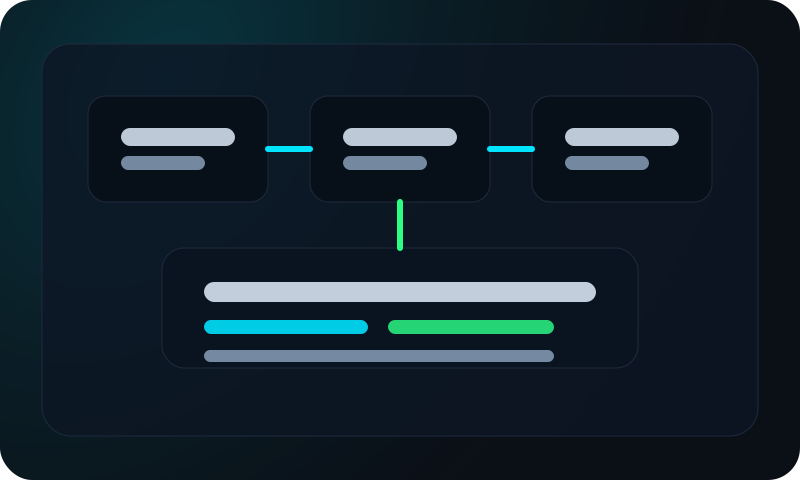
The retained view showed which modules, environments, and ownership boundaries were creating unsafe plan and apply behavior before more refactor work began.
The team did not need more Terraform theory. They needed smaller, safer applies, less shared state, and a way to reconcile manual drift without freezing all infrastructure work.
Contain drift before large refactors
The first wins came from making current-state risk visible and stopping the practices that kept compounding it.
First 72 hours
Protect state, map the unsafe ownership patterns, and identify the manual patches that were breaking trust in Terraform.
Next 2 weeks
Split shared concerns, simplify critical modules, and reintroduce smaller targeted apply sequences with review gates.
Context
Multi-environment SaaS platform with a patchwork Terraform estate and no appetite for risky wide refactors.
Success criteria
Smaller diffs, more predictable plans, reconciled manual changes, and enough change-control clarity for audit and leadership use.
What the team kept after the cleanup
The retained artifacts were meant to outlive the immediate fix cycle and keep the team moving safely.
Risk: shared state across environments
Impact: unsafe apply + rollback confusion
First fix: split ownership + isolate module boundaries
Guardrail: review gates + drift checks before apply
Why this mattered to the internal team
- State and module ownership became explicit instead of implied.
- The team had a safer sequence for reconcile-first change work.
- Leadership could see why Terraform risk was operational, not just stylistic.