
Send the issue. We review it and reply with the safest next move.
Use this page when the team is carrying infrastructure risk right now. The message does not need to be polished. Send what changed, what feels fragile, and where delivery or runtime is getting blocked.
Takes about a minute. Use your work email and tell us what changed, what feels risky, or where delivery is getting blocked.
The first deliverable is concrete
The review is meant to replace vague concern with named failure paths, priority, and sequence.
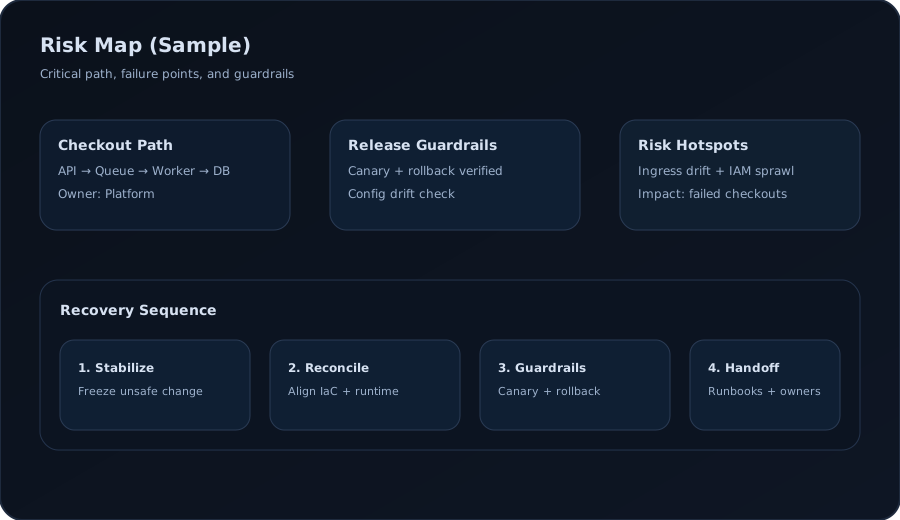
The first artifact names the risky systems, the current failure chain, the blocked owners, and the next safe move.
You do not get abstract advice.
- A written risk map of what is fragile and why.
- A sequenced recovery path that reduces risk early.
- Guardrails and ownership notes the internal team can keep using.
- Clear scope boundaries if specialist recovery work should start immediately.
The audit looks at the system the way an incident responder would
The point is to connect runtime risk, delivery risk, and infrastructure control risk before more changes land.
Architecture and runtime
Service boundaries, critical paths, scaling constraints, failure modes, and operational risk.
Networking and security
Ingress and egress, DNS, TLS, identity boundaries, secret flow, and exposure points.
IaC and drift
Terraform state health, module design, environment strategy, and drift-control posture.
CI/CD and delivery
Pipeline reliability, deploy strategy, rollback behavior, artifact integrity, and release safety.
Already know the failure class?
The same review form still applies. These narrower pages only help if they make the message easier to write.
You can still submit from this page and mention the issue class in one line.
If a narrower page helps you describe the problem faster, use one of these and then come right back to the same review flow.
- Terraform state recovery for broken state, import drift, and unsafe apply posture.
- ArgoCD and GitOps recovery for sync failure loops, drift, and broken reconciliation.
- Infrastructure audit readiness for buyer pressure, evidence gaps, and weak change control.